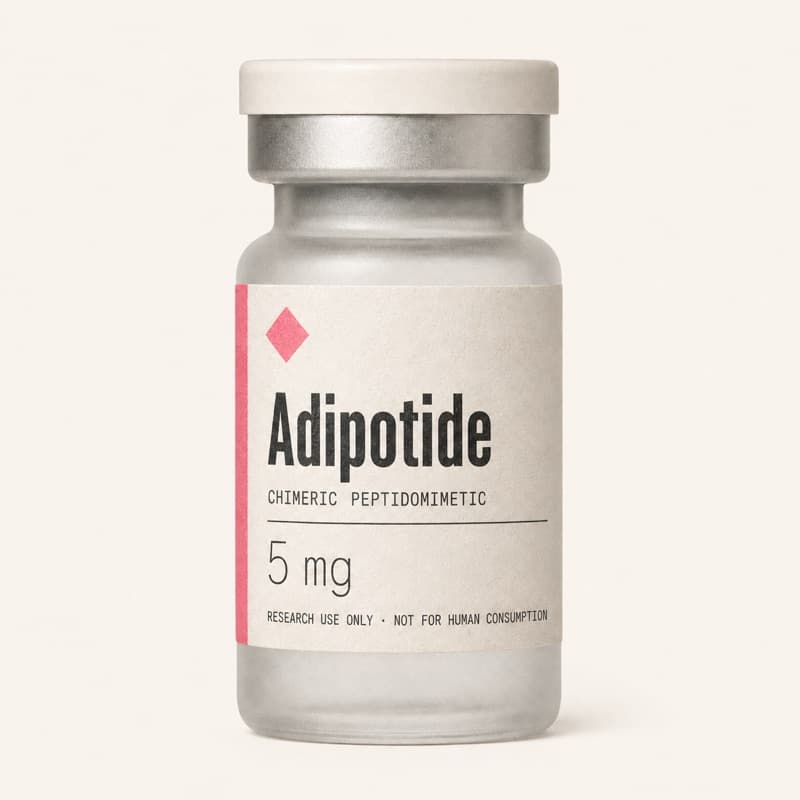
Adipotide
Prohibitin-Targeting Peptidomimetic · Experimental Anti-Obesity
Chimeric peptidomimetic aimed at the vasculature of adipose tissue: it binds prohibitin/annexin A2 on white adipose tissue endothelium and delivers a pro-apoptotic D-(KLAKLAK)2 motif. Obese primates lost fat rapidly and insulin resistance improved, but kidney safety signals stopped development after Phase 1.
Overview
Chimeric peptidomimetic aimed at the vasculature of adipose tissue: it binds prohibitin/annexin A2 on white adipose tissue endothelium and delivers a pro-apoptotic D-(KLAKLAK)2 motif. Obese primates lost fat rapidly and insulin resistance improved, but kidney safety signals stopped development after Phase 1.
The CKGGRAKDC ligand homes in on prohibitin/annexin A2 across white-fat endothelium; once internalized, the linked D-(KLAKLAK)2 disrupts mitochondrial membranes, and localized endothelial apoptosis with adipocyte loss follows.
Research indications
What the compound has been studied for, grouped by body system. Effect size is the reported magnitude where it was measured — not a recommendation.
Obese macaques lost 7–15% of body weight over 4 weeks under selective vascular targeting of white adipose tissue.
In primates, insulin response improved — insulin AUC fell — after fat mass was reduced.
A peripheral vascular approach; weight is lost with no primary appetite suppression.
- Class
- Chimeric peptidomimetic
- Research status
- Emerging
- Typical dose
- 0.43 mg/kg
- Frequency
- Once daily
- Cycle length
- 28 days
- Storage
- Lyophilized: -20°C freezer. Reconstituted: 2-8°C refrigerated
Molecular data
- Type
- Chimeric peptidomimetic
Dosing reference
Doses reported in the literature and by suppliers. These are a record of what has been used in research — reference, never instruction.
| Context | Route | Amount | Frequency |
|---|---|---|---|
| Primate Research Replication | SubQ | 0.43 mg/kg | Once daily |
| Dose-Finding (Research) | SubQ | 0.10-0.75 mg/kg | Once daily (escalating tiers) |
Interactions
Dehydration and GI effects may add together; renal function bears monitoring.
Weight-loss effects overlap; monitoring covers electrolytes, volume status, and kidney function.
Mechanisms differ, and co-administration carries no clinical data.
Nothing published covers combined use or pharmacodynamic interaction.
No direct interaction known; mechanisms and targets are distinct.
Body-composition endpoints may be confounded by metabolic effects.
Vascular and pressor effects are theoretical; dosing staggered, with BP and hydration monitored.
Proximal tubule injury from Adipotide is dose-dependent, so additional renal insults are to be avoided.
What to expect
Safety
Mechanistic flags — properties of the pathway, not observed adverse events.
- Mild creatinine elevation
- Electrolyte shifts
- Proximal tubule changes that are dose-dependent, reversible in primates
- Progressive electrolyte abnormalities
- Unexpected toxicity
- Creatinine elevation that is sustained, or oliguria
- Systemic symptoms, or severe injection-site reactions
- Dehydration
- Concurrent nephrotoxic medications
- Pregnancy or lactation — not studied
Quality checklist
What to confirm before trusting a batch of research material. A verification aid — not an endorsement of any supplier.
- Third-party Certificate of AnalysisIndependent lab · dated · lot-matched.
- HPLC purity ≥ 98%Reverse-phase trace included.
- Mass-spec identity confirmedMALDI-TOF or ESI-MS.
- Counterion stated (acetate ≫ TFA)TFA salts can confound bioassays.
- Endotoxin / sterility statementRelevant once reconstituted.
- Lyophilised · cold-chain shippedStored −20 °C, shipped on ice.
- Labelled “research use only”No therapeutic or dosing claims.
Recorded signals for this compound · 5
- ✓Lyophilized cake intact, white and uniform, which indicates proper lyophilization
- ✓Solution clear after reconstitution: fully dissolved and free of particles
- !Shipping may produce minor clumping, which should dissolve on a gentle swirl
- ×A collapsed or moist cake suggests a temperature excursion; use is off without QC
- ×Cloudiness or precipitate indicates contamination or degradation — discard
FAQ
What separates the weight-loss mechanism of Adipotide from semaglutide's?
The target for Adipotide is the vascular endothelium of adipose tissue, hit directly: a peripheral vascular mechanism producing localized endothelial apoptosis and adipocyte loss. Semaglutide works centrally on appetite through GLP-1 receptors. Weight loss under Adipotide arrives with no appetite suppression, which sets it apart mechanistically from appetite suppressants.
Which kidney safety concerns halted Adipotide at Phase 1?
Mild creatinine elevation, dose-dependent, plus reversible proximal tubule changes in kidney tissue — that is what Phase 1 trials showed. Reversal did occur in primates, yet the kidney safety signals were held significant enough to stop further clinical development. The concern remains a major one wherever Adipotide use is considered.
What degree of weight loss does Adipotide actually produce?
Obese rhesus macaques on 0.43 mg/kg SC daily for 28 days lost 7.4–14.7% of body weight, with insulin sensitivity improved. Equivalent human efficacy is not guaranteed by primate studies, and the kidney safety signals kept human Phase 2 trials from establishing real-world dose-response in people.
Is Adipotide combined with semaglutide for greater weight loss?
Combination data does not exist, and the risks of stacking are theoretical. Rapid weight loss and dehydration would come from both. Kidney effects from Adipotide are dose-dependent, while semaglutide users already meet dehydration and GI issues. Careful monitoring of renal function, electrolytes, and hydration status is required for combined use, which is best avoided absent specialist supervision.